Magnificent and tragic all at once.
Category: in praise of

Nov 02
Seeing a man about a dog.
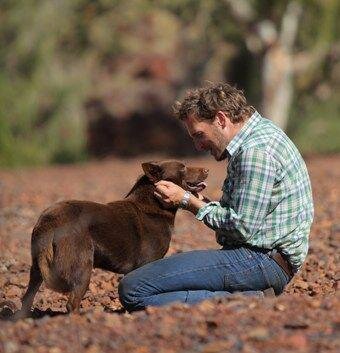
Sigh. Some of my friends love seeing a man with a baby, but really, it’s baggage in a buggy. Baggage that throws up on you and tends to come with a mum attached who’s unlikely to be thrilled you’re trying to steal her man and her baby. How attractive. A man being nice to a dog, on the other hand, is verging on divine. Out of pure self-indulgence (as if writing a blog is anything other than that, come to think of it) so I can see it whenever I want, here’s Josh Lucas being nice to the dog in Red Dog. He’s on the set so he’s not even being paid to be nice. Sigh again.
0
comments
Oct 17

Writing to Jack
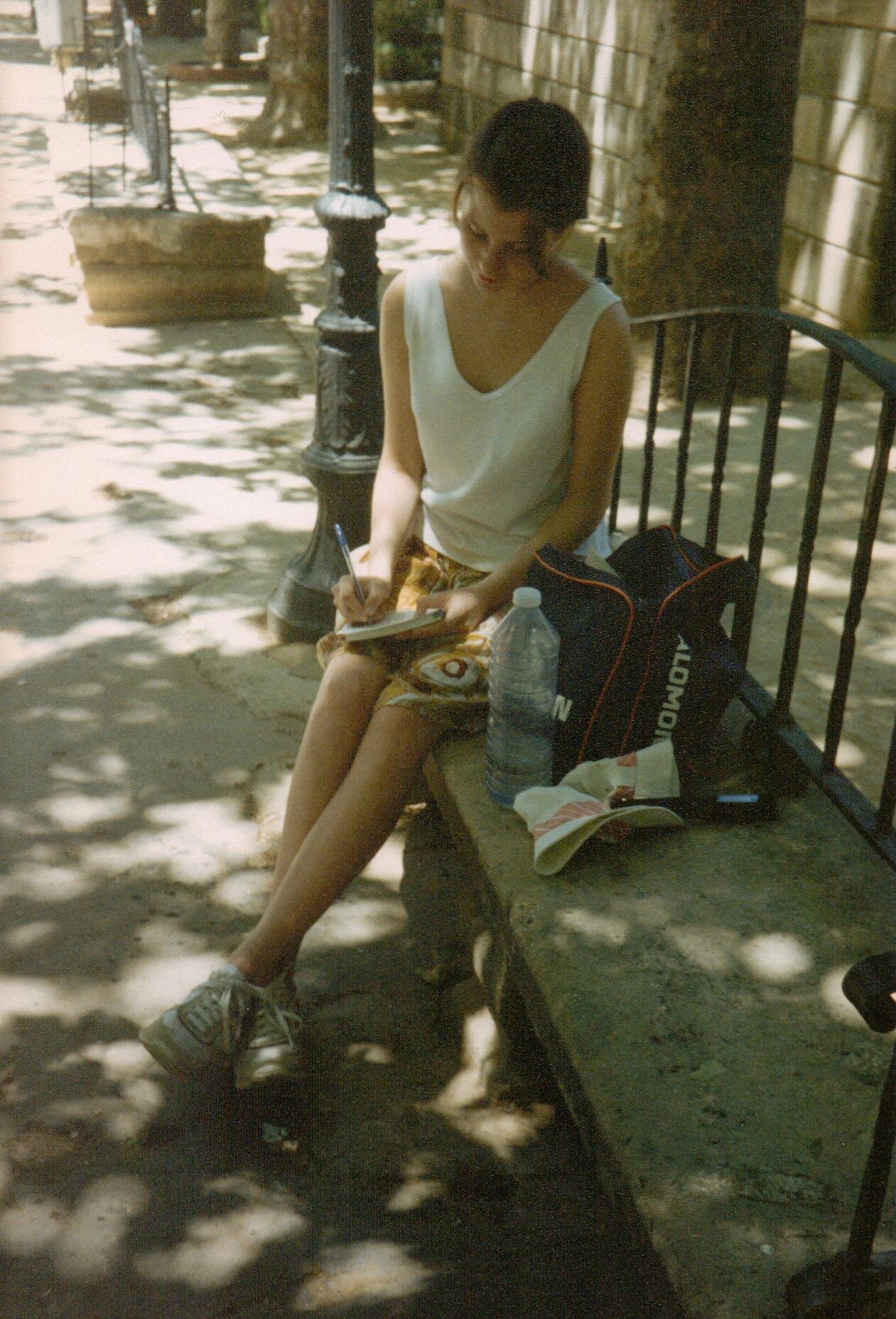
at 15, plagiarising poems in the park
Sorting through a pile of childhood stuff my mum brought round the other day I found a fan letter I’d written to Jack Nicholson when I must have been about 14. It was very earnest with a Shakespeare quote because I’d read in an interview that Meryl Streep had sent him one and he’d loved it. She also had an actual friendship with him rather than an imaginary nothing, but that didn’t seem to matter to me. I don’t know what hers said, but mine went “I would be that I am had all the maidens in the firmament twinkled on my bastardising”. I explained the quote carefully because I didn’t want him to think that “bastardising” was a reference to him never having met his dad – I just meant that he did his own thing regardless of what “all the maidens” might want him to. Something along those lines anyway. I never posted it, though, so I’ll never know what he might have thought of the letter I wrote and re-wrote endlessly in my head. I don’t remember telling anyone about my Jack worship. I just scoured the Radio Times, Smash Hits and Empire Magazine for pictures and taped an interview from Radio One I listened to so many times the tape recorder overheated and melted it. Apparently quite liberal with my affections, I cheated on him with other crushes – a bedroom wall-to-wall with Mel Gibson, a sideways glance at a couple of my brother’s friends, an hilarious history teacher, and a feeling that somewhere out there was something brilliant that would come along and we’d have this life together that I could almost imagine but not quite. (I’m still waiting. The imagined life has gone through many incarnations, but if I could remember what I wanted then, I’d probably find I’ve never strayed much from the teenage longings I couldn’t quite articulate.) I had a friend who wanted to have her English teacher’s babies and another so obsessed with Keanu Reeves she actually thought he’d marry her and cried whenever she saw pictures of him with a girlfriend. The teacher was dull as dishwater and Keanu, having peaked with Bill and Ted’s Excellent Adventure, was already pretty past it.
There were a couple of girl crushes, too. I was still hazy about what being a lesbian actually meant so I don’t think it occurred to me that there might be anything sexual about the girls – they just had a certain something. I remember being terrified when one came into the restaurant where I was waitressing and I had to take her order. She turned her lovely face towards me and this horrid tight-lipped nasal squawk came out. It ruined the whole thing and I’m not sure I could pick her out of a line-up now.
Jack, on the other hand, still has whatever that certain something is and I read recently that he’d like to have one great love before he dies. I don’t pore over pictures of him like I used to and there’s the occasional bit of reality in my love life (its nonexistence or a man driving me so bloody crazy I wonder if anything in the whole world is worth it), but I wouldn’t turn him down. I’m still touched whenever journalists refer to his vulnerability in interviews. Sad, I know, but I don’t care. I’ve heard it said that we never get over our first love (mine was a beautiful cat who I wouldn’t get neutered so he went off to gallivant about with the lady cats and never came back), but I think crushes last longer. It’s probably something to do with the total absence of reality. Whatever it is, they’re marvellous.
1
comments
Oct 02
Relinquishing control
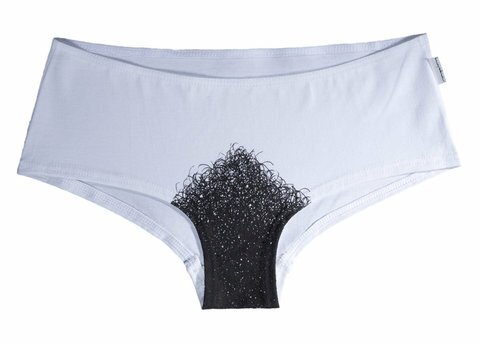 When a man I rather liked called last week to see if I fancied a drink, my first thought was that it sounded great and I’d love to see him. This thought was immediately followed by one about body hair and how I was going to get rid of it. After I came off the phone, I spent half an hour thinking about when would be the best time to pluck the hair round my nipples. If I did it right that minute like I wanted to, it might have grown back by the time Saturday arrived, but the area round any ingrown hairs I’d made red would have healed. On the other hand, if I left it till the day before there would be no hair but there might be some slightly reddened spots. In the time spent thinking about whether to pluck or not to pluck I could have done all manner of things: sorted my accounts so I could be the same smug cow I was last year when I filed my tax return the day it was due; sent off emails to MPs I’m hoping will support a ban on Page 3, a significant step in the fight against the exploitation of women’s bodies for profit; cleared out my wardrobe and filled a bag with clothes for the charity shop round the corner; cleaned the grillpan. At a push, I might well have secured world peace. But no, I thought about nipple hair instead. Of course, once I’d started thinking about my breasts, I started wondering about my legs, upper lip, chin and, the subject of many anxious dreams, my bikini line. I decided I’d better take a pass at my legs with the electric shaver – or the lawn mower – because they were likely to blunt anything with a blade in their current state of hairiness. I gave myself an attractive shaving rash on my thighs that refused to go down despite being smeared, hourly, with hypercal cream. Inexpertly waxing my chin left a dry, itchy patch I tried, unsuccessfully, not to rub till it became this little red triangle of inflamed and peeling skin. Uncomfortable and unattractive, yes, but I had no whiskers.
My bikini line I’d leave au naturale, I decided. It would be my statement – my I’m free, wild and couldn’t give a shit about the beauty standard statement. Really, I was so thoroughly bored I couldn’t be bothered doing anything with it and I’ve never had much luck trying to make it look smaller, neater, cuter – whatever it is we’re supposed to do with a small and unremarkable patch of hair. I tried waxing it once and it made me cry and accidentally step on my rat’s tail (see The painful process of finding a mate for the unlovely details). Shaving always causes an itchy rash and I have to sort of wriggle and squirm at bus stops/in the queue at Tesco/waiting at the bar to get my thighs to rub together because I can’t just take off my knickers to stop them chafing. I once tried taking it all off with cream just to see what the Hollywood was all about. It was horrible: I looked down and saw a child’s vagina. I can’t remember what my boyfriend at the time thought – whether he liked it or not – but I’d look every time I went to the loo, hoping it would have grown back a bit. Eventually, it did and I stopped obsessing about what was or wasn’t going on in my knickers. My pubic hair had taken back control of my nether regions. I felt womanly again. Hear me roar.
When Saturday night arrived, I decided to wear no knickers because there’s supposed to be something sexy about going commando. Maybe it’s blissful without the chill of an October night up your skirt and your period starting early. I don’t know. What I do know is that a little perspective tends to make for a more interesting time. My follicles will do whatever they want – if I’m to have hair on my thighs and a few on my breasts, then that’s where they’ll grow. There’s no point being a body hair vigilante because it’s a losing battle that requires copious amounts of time, effort and money. Smooth legs feel nice, but they’re just legs. This is not something to obsess over, even if for no other reason than that it’s horribly boring. The date was lovely.
0
comments
Aug 22
In praise of extreme plastic surgery
Every year, in Britain alone, around four thousand women come round from cosmetic surgery operations to discover that, far from gaining the perfection they had been promised, they are severely disfigured. There is estimated to be a 10 percent failure rate in facelifts, and a 70 percent complication rate in breast implant operations. Liposuction around the eyes can result in blindness and breast implants may lead to loss of sensation in the nipple, leakage of silicon into other areas of the body causing anything from puckering of the skin to cancer and death, hardening of the implant and chronic back strain. Peter Davis, a consultant and then-Secretary of the British Association of Aesthetic Plastic Surgeons, once detailed a procedure for dealing with such complications (the most common of which is the formation of a membrane by the body around the alien substance of the implant) that, in view of assault legislation and clinical practice, should have greatly compromised his career. “I just get my hands on it and nutcrack it! It makes a noise like a small balloon bursting, and they go ‘Aah, that’s better!’. And that’s that. The membrane is only like a thin polythene bag, which makes it easier. But sometimes it won’t crack open. Then I have to operate again”. If you don’t fancy risking Davis and his nutcracker, you could try microlipoinjection, otherwise known as having your own fat injected into your breasts. The only problem so far is that the fat has a tendency to liquefy and rot. Not really very attractive and putrefying zombie breasts probably wasn’t the look you were going for. Microlipoinjection is the latest thing, but it’s as peculiar as the ivory, glass balls, ground rubber, ox cartilage, polyester, and sillicon injections women have had stuffed into their breasts, in the past, in the quest for a bigger, firmer bosom. Can’t say I’d want any of them in direct contact with my lymphatic system – even my own organic matter, sucked from any one of a number of spots it wouldn’t be missed.
If you’re looking to get smaller, there’s “the kiss of the cannula”, “slurp and slice”, and liposuction, otherwise known as “God’s gift to women”. You might go rotten (necrosis of the area is a possible side effect) or die, but you’ll have a jawline and abs worth risking death and decay for. First performed in 1926 by French surgeon, Charles Dujarier, it caused the patient to lose a leg to gangrene. It resurfaced periodically in the 60s, 80s and 90s, but the rate of complications and deaths tempered the enthusiasm of surgeons eager to streamline their patients. It didn’t temper demand, though – losing the saddlebags being a higher priority than losing one’s life, apparently.
For your face, there’s paralysis in the form of the neurotoxin, Botox. Injected into anything that might move, the procedure is being carried out on women as young as 17, before the wrinkles – otherwise known as character – set in. As a 34-year-old long-term frowner, I thought I was probably past saving, but a surgeon assured me that, with a “mini-lift” and botox, I’d look “refreshed and revitalised”. I resisted on the grounds that, unable to frown, how would I look cross. Just when I was least likely to be interested in talking to anyone, I’d have to explain my mood. That and I didn’t want to risk looking like I’d just re-entered the earth’s atmosphere.
The good old-fashioned nose job was first developed in India around 800 BC by the physician Sushruta as part of a series of techniques for reconstructing noses, genitals, and ear lobes removed for criminal, religious or military punishment. 750 years later, encyclopaedist Aulus Cornelius Celsus – a man with a fine nose himself – detailed techniques for the reconstruction and correction of noses. Quite what these prototype nose jobs looked like, I don’t know, but surely no more disastrous than the nubbin Michael Jackson called a nose.
Michael Jackson is a fine example of what I like to call creative-extreme plastic surgery. Unlike the tweak and tuck brigade with their noses shortened, limps plumped, faces frozen and bosoms heaving, Michael Jackson took a creative approach to his surgical modifications. He had his face sculpted to look like something no one had ever seen before, while mysteriously getting paler in the process. Whatever you might think of the result, at least it was original.
 Trying to stop her husband cutting her off financially and running off with the 21-year-old Russian model she found him in bed with, Jocelyne Wildenstein decided to transform herself into a replica of a jungle cat, his favourite animal, basing her look on a clipping from the National Geographic. It didn’t stop her husband running off (rumour has it he screamed when he saw her new face), but she was awarded millions in the divorce settlement – enough to cover the surgery costs, anyway. She’s lost her peripheral vision and had to come up with gestures to convey the moods and expressions her immobile face will not. Yes, she looks ferocious, if a little cross-eyed, and I’d rather have her guarding my house than wake up next to her, but there’s something admirable about someone taking such a novel approach to their marriage, even if she did do it to (attempt to) satisfy a man.
 Dennis Avner, otherwise known as Cat Man, makes Jocelyne Wildenstein look like a cute little kitten. After being inspired by a meeting with a Native American Chief to “follow the ways of the tiger”, he’s had his upper lip split, face tattooed, nose flattened, ears pointed, teeth filed into points, silicone cheek, chin, and forehead implants, and facial piercings to which he attaches whiskers. He eats raw meat, is planning to have cat-like ears attached to his scalp and says he has lots of girlfriends. If I didn’t have to look at the teeth and he took out the cat-eye contacts and worked on his growl (it’s not very impressive – kind of a small hiss), I might be able to handle it. He does seem like a nice chap.
 The human Ken doll is a sight to behold. Saying he wanted to maintain his youthful looks, Steve Erhardt has frozen his face into Ken’s perpetually quizzical yet vacant look. He’s had pec and bicep implants and abdominal etching to create Ken’s barrel chest and tiny, sculpted waist and his face lifted, botoxed, and injected with silicone. His latest procedure is what he calls “orbicularic surgery” to remove crow’s feet and stop them forming altogether by removing the skin from the muscle so, when the muscle moves (if it can), it doesn’t make the skin move with it and voila no crow’s feet can form. If he’s transformed himself into a eunuch to complete the process, he’s yet to admit it.
I wouldn’t want to look like any of these people – nor would I want to wake beside them – but I do admire them. They’re accused of having body dysmorphic disorder and of being freaks – vain, obsessed and insane. They’re tabloid fodder and here I am using them to make a point. I think they should be icons of individuality. They’ve taken an industry, grown rich on exploiting insecurities and conventional concepts of beauty, and used it to make real their fantasies. Those fantasies may be based in fetishes, but then so are everyone’s – we all fixate on something and we all want to be unique or, at least, ideal. Women carved up by surgeons in search of a land that time forgot, are neither unique nor ideal. They all have the same things done, each hoping to look perkier, more youthful and taut than the next, until they start to look like their own waxworks. Unless your plan is to look like your teenage daughter, in which case never look more than 19, then the age beyond which you mustn’t age is 35. There’s a revolving gallery of women in varying degrees of preservation, none of whom look entirely human. Neither do Jocelyn, Dennis and Steve, but at least they’re worth remarking on. Of course, if you really want to appear unique, the best thing is to get nothing done. Everyone starts off looking like no one else.
2
comments
Jul 13
In praise of the lady gadabout
 Unkempt, unruly, bad-mannered, and lascivious, the blowsy woman has long been dismissed for her sluttish ways and refusal to behave nicely. Originating from the 18th century blowze, the word blowsy has been used to malign a woman as a beggar, wench, and – of lower social ranking to the beggar himself – a beggar’s female companion. I think it’s time her virtues were re-evaluated.
What a blowsy woman really is, is a woman of appetites – for food, drink, sex, and all that life can offer. She’s not perpetually mid-diet, turning down dessert and pounding her joints on a treadmill to burn off the few calories that may have slipped in somewhere between the no-fat-gluten-free muffin and the salad, sans dressing. Her drinking is not a glass of wine with lunch and her love affairs are not discrete. Nor are they with her husband. But the real problem in all of this – the thing that has brought her so much suspicion and derision – is that she doesn’t care. She doesn’t have time to be forever presentable and polite. Her waywardness is too time-consuming and, frankly, too much fun. Who can be bothered with etiquette and preserving your looks when your lustiness might take you somewhere far more exciting? read on
1
comments
Jul 04
How To Have Your Home Restyled By Rats In A Few Easy Steps
There are many interior design and decor approaches and many magazines, blogs, and websites devoted to restyling one’s home. Yes, the houses look lovely – all those bijoux finds, sleek lines, and splashes of vintage (reclaimed old tat, mostly) – but they lack a certain something, that je ne sais quoi one can find in adopting an entirely different approach. I’ve welcomed into my home the breathtaking talents of Georgia&Min, Rat Designers of Lorne Street.
Rats are inventive, enterprising, imaginative, hard-working, and very particular in their tastes. For these reasons, amongst other things, they make excellent interior design consultants. They are unafraid to express their views – lacking any linguistic skills that we might understand, this tends to be done through actions rather than words.
For example, should they think your wallpaper is outdated, they’ll show you exactly how best to remove it.

They are excellent upcyclers, rivalling even Blue Peter in its prime with their ingenuity in transforming the old and worn out into fetching additions to the home. Here they’ve taken a tatty old cushion and, with a little tearing along the seam and dragging out of its contents voila it is snug bedding that doubles as a barrier to stop you chasing them out from under the sofa with a broom handle.

Old ornaments are turned, overnight, into bright arrangements, adding blasts of colour to your home.

Furniture is renovated with minimal effort on your part.

With a paws-on approach, they introduce new colour schemes into your home. In this case, striking smatters of black, sourced from renewable resources found in the coal scuttle.

Soft furnishings and their suitability for your home are subjected to the most rigorous assessment and removed if their presence simply does not contribute to that sense of your own energy, oozing from the canvas that is your home.

Clutter is sorted through and assigned to the bin or used to create a bold display on your desk and floor.

Room dividers that are simply not pleasing to the eye are dismantled.

They also provide a number of auxiliary services such as looting your laundry bin to save you having to wash it. This saves both time and energy – benefitting you and the environment. Note the single pair of nice, presentable in any situation knickers left for you to handwash and wear. Rats are nothing if not considerate.

And, after a long day spent refurbishing, they will join you for dinner. Their manners may be somewhat unfamiliar to you, but remember they are creative types whose quirks and affectations are simply symptoms of their genius. One cannot expect the artiste to abide by the rules and expectations of our primitive, tasteless, irrelevance of a society.

0
comments